As if you needed any more reasons to visit Bali, the Land of the Gods! Bali appeals to many different travellers for it’s myriad variety of faces. World class scuba diving and surfing? Got it. Volcanic cones looming over lush terraced rice fields? Yup. Yoga retreats, intricately carved temples, arts and crafts, great food, friendly locals, nightlife to suit every taste – it has all it all.
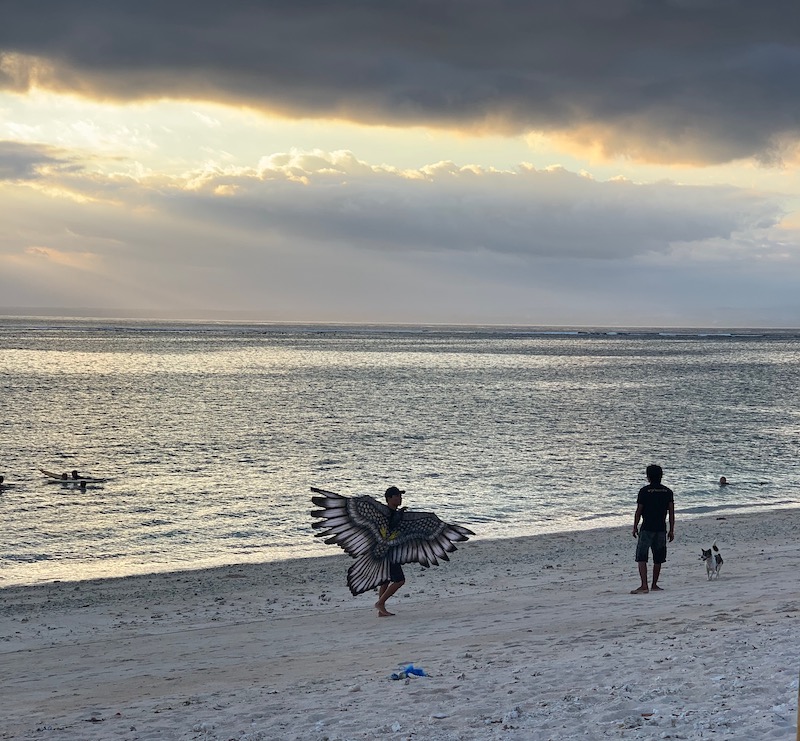
On our recent trip, we discovered yet another charming aspect of Balinese culture – kite flying. The skies above Sanur beach and Nusa Lembongan are beautifully strewn with kites in the late evenings of July & August, when the seasons change and the wind is stronger.

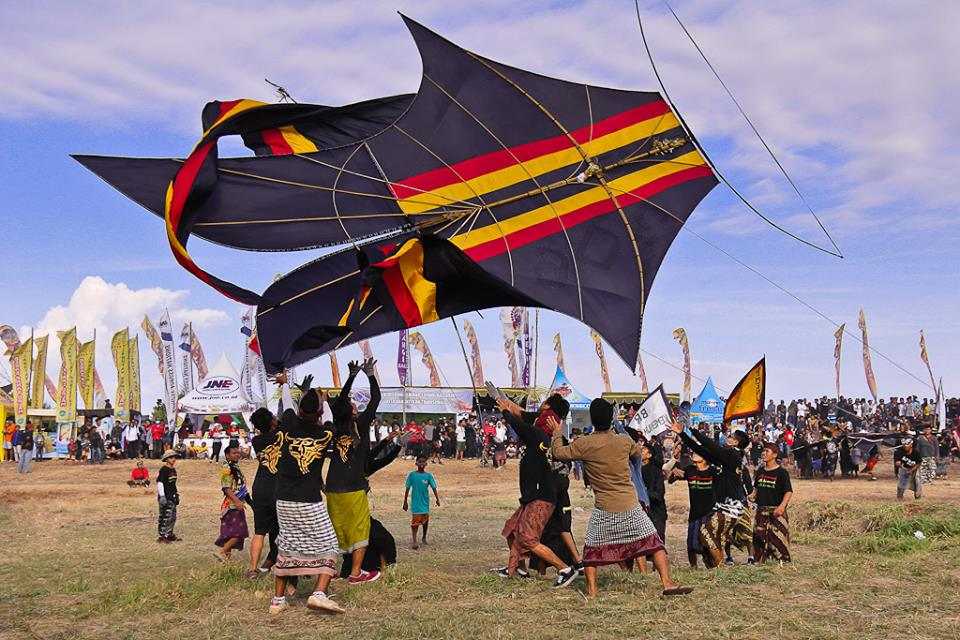
Kite flying is an ancient tradition in Bali, with families and villages all working together to build the often very elaborate, and very large, kites. Each year there is an international kite festival on held at Sanur beach, with kites up to 120m long, requiring up to 70 people in the team to make, fly and cheer them on. This is a serious business and everyone gets involved.
The origins of kites are not well known, and they may have originated in China, with kite flying eventually spreading to become a popular custom all over Asia. The Balinese are a majority Hindu people, and as in India, the kites in Bali were originally flown to worship the Gods, praying to them for an abundant harvest. A larger kite would clearly attract more attention from the deities, and from there the competition between neighbours and villages has grown.
Made from bamboo struts and cotton cloth, there are several distinct kite shapes, with popular traditional shapes being the fish (Bebean), the bird (Janggan) and the leaf (Pecukan). The Pecukan is reputed to be the hardest to fly, fluttering restlessly in the breeze, and trying to fall to the ground. We also saw other kite styles including owls and butterflies.
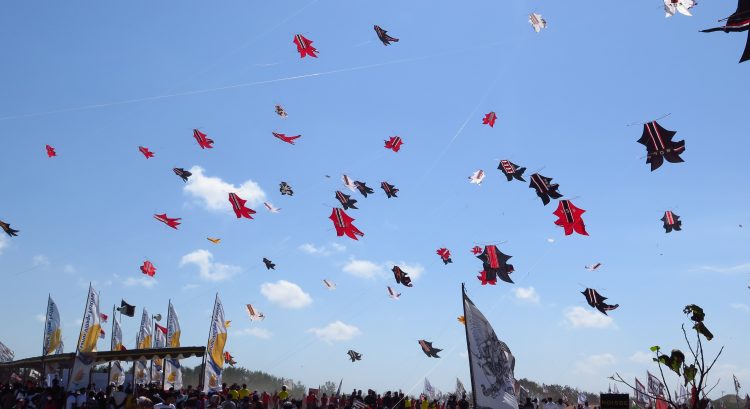
Whilst we unfortunately missed the main festival and the massive kites on display there, each night on Nusa Lembongan, where we stayed for our trip, it seemed the whole village turned out onto the beach and flew kites until the sun lowered over the horizon. There would have been nearly a hundred kites in the air each evening. The larger and more elaborate kites were over 2m wide, but there were also trainer kites for the kids.

The main hazard for Lembongan kite flyers is the sea. Kites that went down into the drink struggled to regain flight, and had to take a break to dry out on the beach.
Sitting on the beach watching the kites, and the antics of the people flying them, was mesmerising and a lovely relaxing way to end each day. Highly recommended as a stress-buster activity!
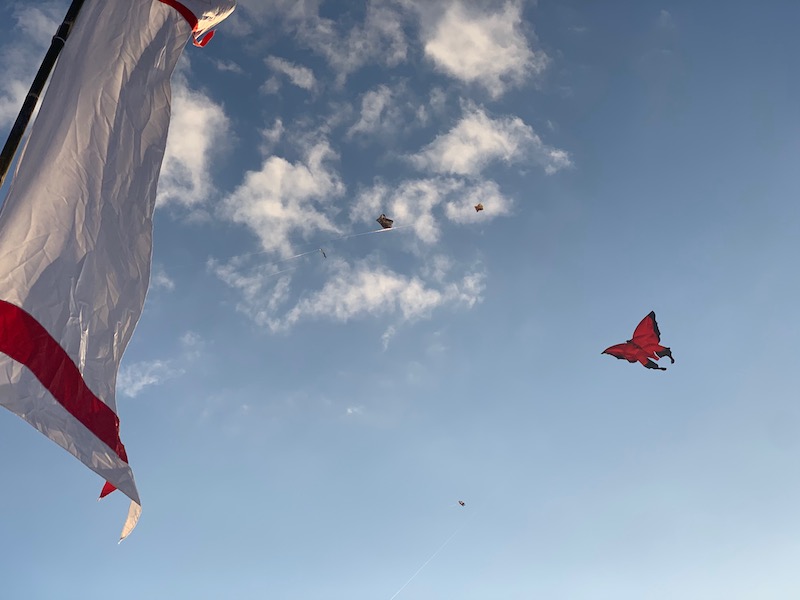
Bali is an amazing destination, it has something for everyone and at pretty much every price range. Being in the tropics the weather is great for a trip at any time of the year, however July and August are usually peak season in Bali, with international tourists arriving from Australia, Europe and Asia, which coincides with the best kite flying weather. I would definitely recommend a Bali holiday to anyone, and if you are planning a trip to the Land of the Gods, go ahead and plan in some time to check out the wonderful kites.
There are lots of resources about Bali, including the Indonesia Tourist Board, Wonderful Indonesia site, but if you have any questions about planning your trip, drop me a question in the comments below.
 Letter from Jakarta.