
In the 2 months since I started this dairy free journey. I’ve made some adjustments to my diet, but so far it has not been as hard as I thought it would be. Here’s where I’ve gotten to so far:
- Eggs: gone
- Butter: gone
- Yogurt: replaced with coconut yoghurt
- Milk: replaced with almond / oat / soy milks
- Chocolate: dark, non-milk only
So now to the thorny subject… cheese… I used to eat a lot of cheese, really a lot. Cheese was the main reason I didn’t consider going vegan in the past. The after dinner cheese board was a regular feature in our house. I also used cheese in cooking for many meals, therefore cutting out cheese meant a big adjustment.
The Cheese Challenge
To make the challenge less of a one-hit problem, I figured I needed to break my cheese eating into categories and tackle them one at a time. No cold turkey strategy, just a steady adjustment, first reducing the things that were easily replaced or omitted, and working my way into the harder stuff. I roughly broke it into 3 groups: firstly, the cheese board, secondly cheese sauce based meals, and thirdly dishes based mainly around cheese.
- The cheese board – I stopped buying cheese. Sounds so simple doesn’t it! I considered buying vegan cheese, but this is Jakarta and there isn’t much available. And it was really expensive. And it didn’t look very appetising. And to be honest, I’m a bit of the opinion that cheese is cheese, don’t try and replace it, just eat something else. So I made hummus, a mushroom pate, and a beetroot dip, and now whenever I would have reached for the cheese board I snack on these delicious dips with nuts, olives, artichokes, dates and other plant based nibbles on plain or tempeh crackers. This strategy has worked really well so far.
- Cheese sauces – In this category, I group dishes like lasagne, moussaka, parmigiana and good old cauliflower cheese. I found some recipes online for vegan mozzarella, which is very easy to make at home (see my other post on “2 magic ingredients”). Its not as creamy or as stretchy as proper mozzarella, but is a very acceptable cheese sauce substitute. So now when I feel like making any of these dishes I use vegan mozzarella as a cheese alternative. Not 100% the same, but plenty good enough.
- Cheese dishes – by this I really mean things like pizza. Can you have pizza without cheese? I’m sure there are other dishes in this category as well, where cheese is just so fundamental to the recipe that it would be hard to re-create without it. I have to admit, I have had pizza, proper pizza, with cheese on, a couple of times over the last few months. We have had limited food delivery options, and its hard enough to find vegetarian options, let alone vegan, and I can’t face cooking and washing up for 3 meals a day, every day! Thats my excuse, and so I ate pizza. I figure if thats my only discretion, I’m not doing too badly. Now that lockdown has been eased here in Jakarta for a few weeks, and restaurants are allowed to open at 50% capacity, we have many more options and I am definitely cutting back on pizza.
Hunger Games
One thing I did find when I cut out dairy was that I got hungry more often. I guess thats not surprising given that most diary has a high fat content. When I did some research on this problem, I found that the hungry rumbles can be caused by a lack of protein (which I never had an issue with being vegetarian and eating diary), but luckily there is a simple guideline that can be followed to avoid this.
The guide is to eat at least 2 of the plant based protein sources each day. There are 3 types of plant protein: grains, legumes (beans), and nuts. Legumes includes soy products such as tofu and tempeh that are made from soy beans, as well as lentils, chickpeas, kidney beans etc. Each food type contains a different set of proteins, but usually a combination of any 2 will give the full protein complement that your body needs. It sounds complicated but is actually very simple. For instance, think of bread with baked beans, or bread with peanut butter, both great examples of 2 protein types. Another example is to have cereal for breakfast and snack on a few nuts later in the day. The 2 types don’t have to be consumed in the same meal to be effective.
I found adding a few more nuts as snacks during the day solved the problem, and I haven’t had any issues being hungry since.
Milk Alternatives
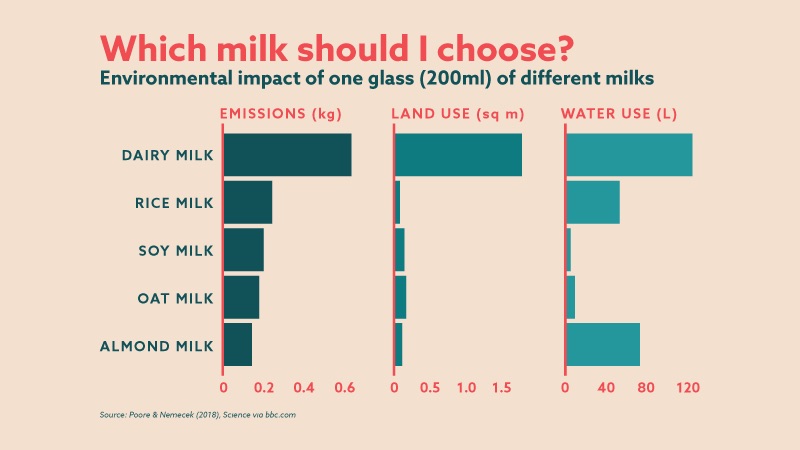
Just a note on milks. I have been doing a bit of browsing about milk alternatives, and all are not made equal. Below are 2 graphics showing the main differences. Almond milk has a large water-use footprint, at nearly 80l per 200ml, but has the lowest calories if weight loss is your aim. Oat and soy milks have the highest protein levels of the plant based milks, and smaller environmental footprints. Many packaged plant milks are fortified with calcium and D vitamins and hence are no disadvantage to cows milk. I have found some oat milk suppliers on Tokopedia and I think this is my favourite milk-alternative so far.

That’s all for this week. Stay tuned for more tips and tricks on how to go diary free.
 Letter from Jakarta.
Great post 😁
LikeLike